

Every team says it does project management. Few actually do. Most perform ceremonies: refinement meetings, colorful boards, and burndowns that nobody looks at. Real project management is something else—it helps the team decide what to do, deliver it, and adjust without drowning in ritual.
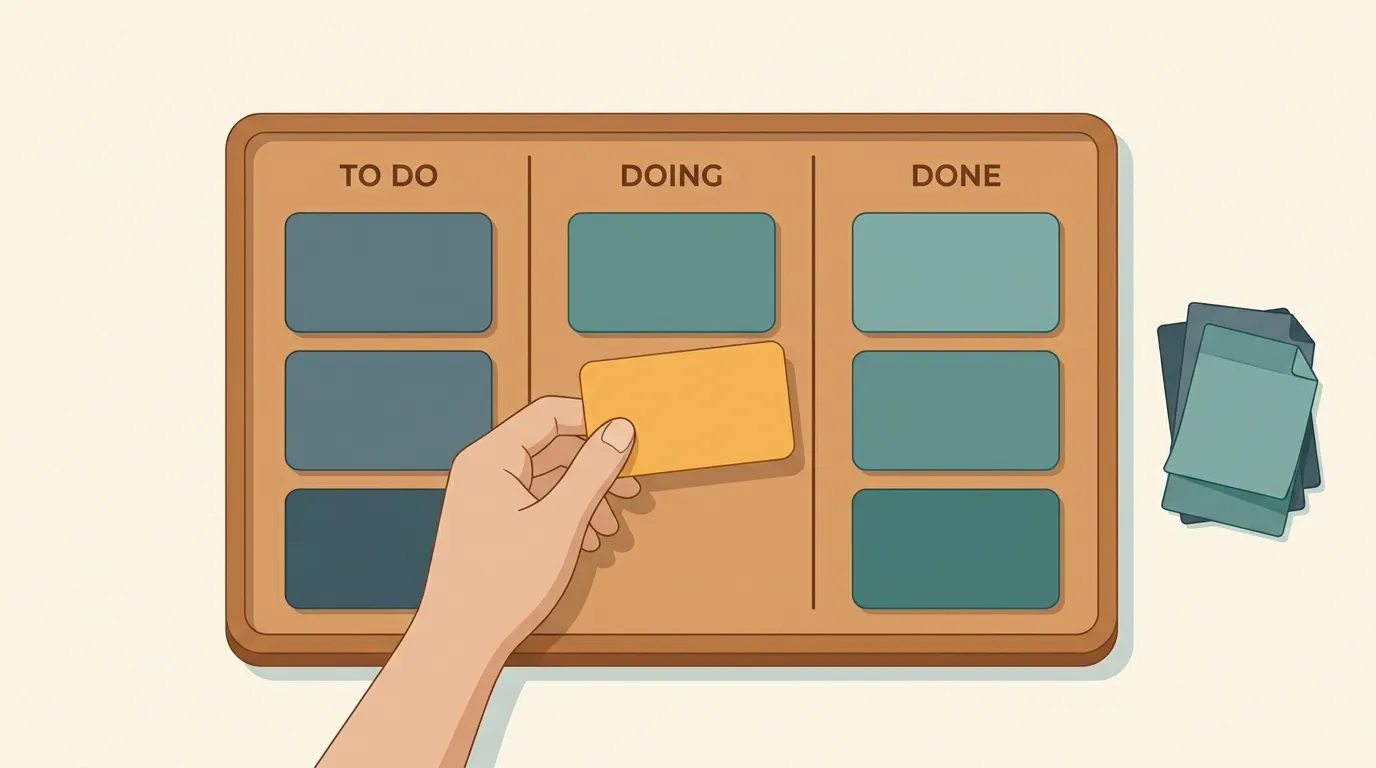
A backlog nobody opens is trash, not a plan
A backlog is not a storage bin for ideas. It is a queue of decisions. If it has 400 items, you do not have a backlog—you have a graveyard of good intentions that makes everyone feel guilty whenever someone opens it.
Cut aggressively. An item that has been sitting untouched for six months is not going to get done; archive it. The top of the backlog needs to be clear enough for someone to pick up tomorrow without asking any questions. The rest can stay vague—you refine it when it gets close, not before.
Prioritizing means saying no out loud
Prioritizing does not mean sorting everything by “importance.” Everything is important to someone. Prioritizing means choosing what stays out and owning that decision in front of the person who asked for it.
Forget effort-impact matrices with made-up numbers. Ask a direct question: if only one thing ships this week, which would hurt least to go without? Do that one first. And when the boss asks you to “squeeze in” one more urgent item, the honest answer is: “It can come in, but something has to go out—which one?”
Honest estimates fit into three sizes
Estimating in hours is fiction with decimal places. Nobody knows whether something will take 6 or 14 hours, so stop pretending.
Use three sizes: fits in a day, fits in a week, or I don’t know yet. The third is the most valuable—“I don’t know” means you need to break the work down or investigate before promising a deadline. Teams that estimate honestly miss less often because they stop lying to themselves.
Short cycles are about feedback, not speed
A two-week sprint does not exist to make you produce faster. It exists to help you discover sooner that you were heading in the wrong direction.
A short cycle only works if it ends with something real—a feature in production, a user trying it, or someone saying, “This isn’t what I wanted.” A sprint that ends with code on a branch and no feedback is just a chopped-up calendar. The gain is in the learning, not the pace.
Clear communication kills half the meetings
Half of all meetings exist because nobody wrote anything down. A decision made verbally evaporates; two weeks later, everyone remembers it differently.
Write it down. The decision, the reason, and who owns it—three lines in a channel everyone reads. A 30-minute daily becomes a two-paragraph message. You do not need more alignment; you need fewer things said and more things recorded.
Process theater: learn to cut it
Process theater is any ceremony that continues to exist after it has lost its purpose. Story points that have become a target. Retrospectives where nobody tells the truth. Status reports that nobody reads but everyone still fills out.
The test is simple: if the meeting were canceled tomorrow, would anyone genuinely miss it? If the answer is no, cancel it. Good process disappears when you look at it—it helps you without demanding the spotlight.
Good project management is nearly invisible. If the team spends more energy maintaining the process than delivering, the process has become the product. Cut the theater, keep what helps people decide and deliver—and give the rest of the time back to the people building the software.