
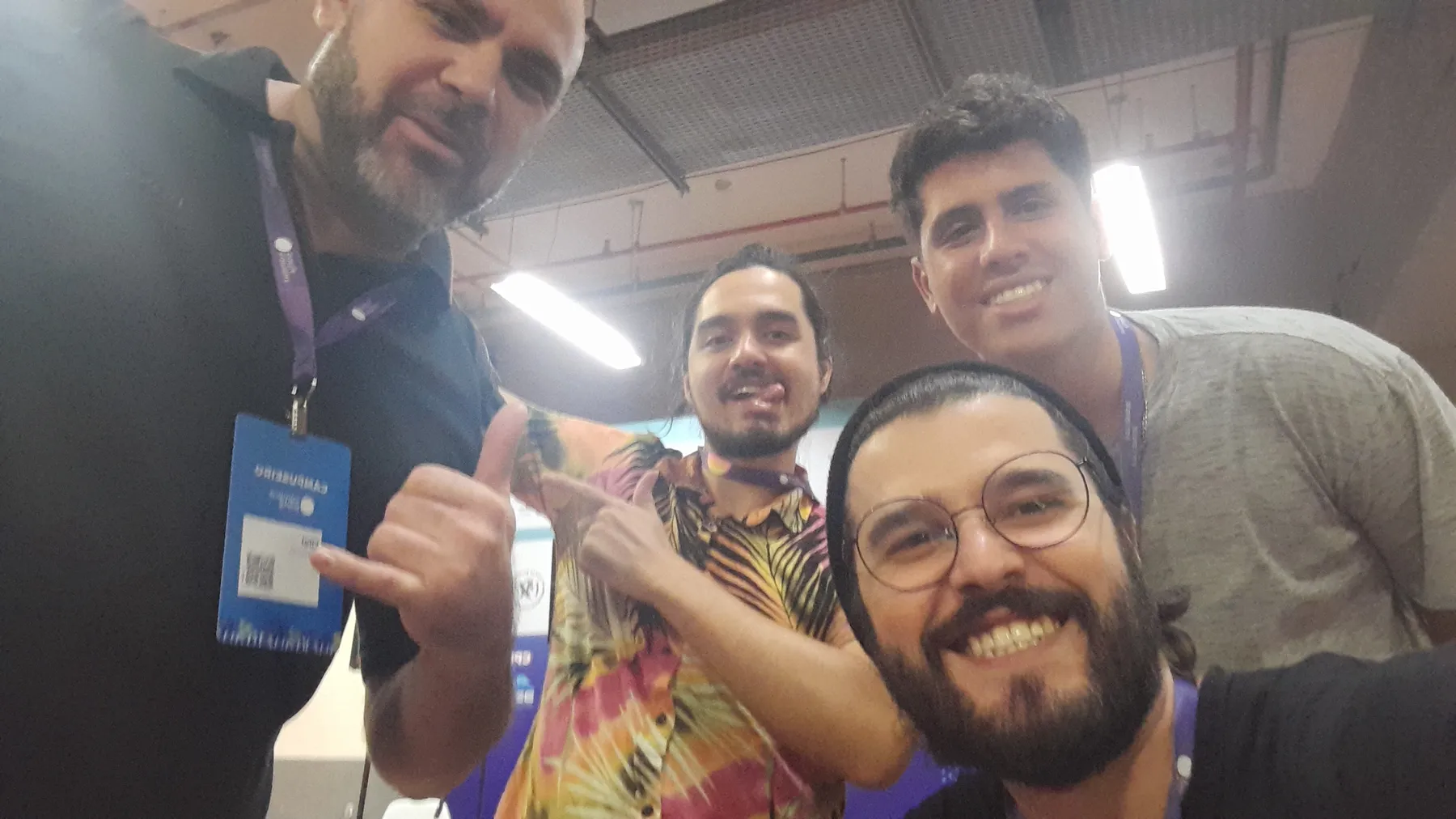
At Campus Party Brasil 2025 (CPBR17), inside the Arena BRB Mané Garrincha in Brasília, DW Corp and the Software Craftsmanship Community Brasília (SCCB) led an entire track of technical content. One of the most popular sessions was the “Error-Proof Vibe Coding” workshop, led by Danrley Pereira and Lucas Dórea. The proposal was straightforward: show how to turn that excitement of “I’m going to code on impulse with AI” into something that can actually become a product—without creating an unmaintainable monster.
This is a practical recap of what happened on stage and the lessons you can take away.
Vibe coding doesn’t mean giving up control
“Vibe coding” has become a friendly nickname for the practice of letting an LLM guide much of the code-writing process while you describe what you want. It is powerful for prototyping, but it comes with a catch: when you don’t understand what was generated, AI stops being a tool and becomes a black box you can only hope will work.
The workshop’s message was the opposite of that. Using Claude Code, Danrley and Lucas demonstrated a workflow in which the developer remains in control: you read, question, and refine every generated piece. AI speeds up typing and obvious choices; architecture, boundaries, and business decisions remain yours. Rapid prototyping is only worthwhile if you can still explain, line by line, what is running.
The sequence of prompts matters more than the perfect prompt
One of the central lessons was that good results rarely come from a single magical prompt. They come from a sequence: first, you align the context and objective; then you ask for a small skeleton, validate it, and only afterward evolve it in short steps. Each iteration is an opportunity to correct course before an error spreads throughout the prototype.
This cadence is very similar to what the craftsmanship community has advocated for years: small steps, rapid feedback, and continuous refactoring. AI does not replace this rhythm—it accelerates it, as long as you maintain the discipline of reviewing every step.
Token efficiency is also energy efficiency
Another point that sparked a lively discussion among the audience was cost. Every interaction with an LLM consumes tokens, and tokens cost money and energy. Bloated prompts, huge contexts repeated with every message, and directionless trial-and-error loops waste resources.
The presenters demonstrated simple habits that reduce this waste: be specific about the scope of each step, reuse context concisely, and stop “chatting” with the model when the next step is clearly a task you should handle manually. Writing efficient prompts is not just about saving money—it is a choice for energy efficiency. At a time when data center consumption is being discussed so often, treating every token with respect is a concrete way to develop responsibly, a value that DW Corp takes seriously.
From a polished prototype to a sustainable MVP
The final part of the workshop focused on the hardest transition: moving from a prototype that impresses in a demo to an MVP that can withstand the real world. The message was honest—much of the code generated by AI looks ready, but falls apart at the first edge case.
Some of the practices the presenters highlighted included:
- Write tests early, so AI generates code against a safety net rather than against your hopes.
- Keep every change small and reviewable, avoiding the “generate everything at once” approach that no one can audit.
- Treat generated code as real code: read it, review it, and refactor it before considering it ready.
A sustainable MVP is one that the next person can understand and evolve—including you, three months from now.
What to take from the stage to your screen
If the takeaways from “Error-Proof Vibe Coding” had to be summarized, they would be these: stay in control and understand what the AI writes; think in terms of prompt sequences, not isolated prompts; respect tokens as both a cost and an energy resource; and never confuse a polished prototype with a robust product. AI is an extraordinary ally for rapid prototyping—but you are the one who builds real software, with judgment and care.
That was the vibe Danrley and Lucas wanted to leave at CPBR17: code with energy, yes—but error-proof.