

Few things are more nerve-racking than your first round of technical interviews. The good news: they test far less memorization than you might think. This guide is for anyone starting out or changing careers who wants to replace panic with a plan—what to study, how to practice, and how to perform when it matters.
What a technical interview really evaluates
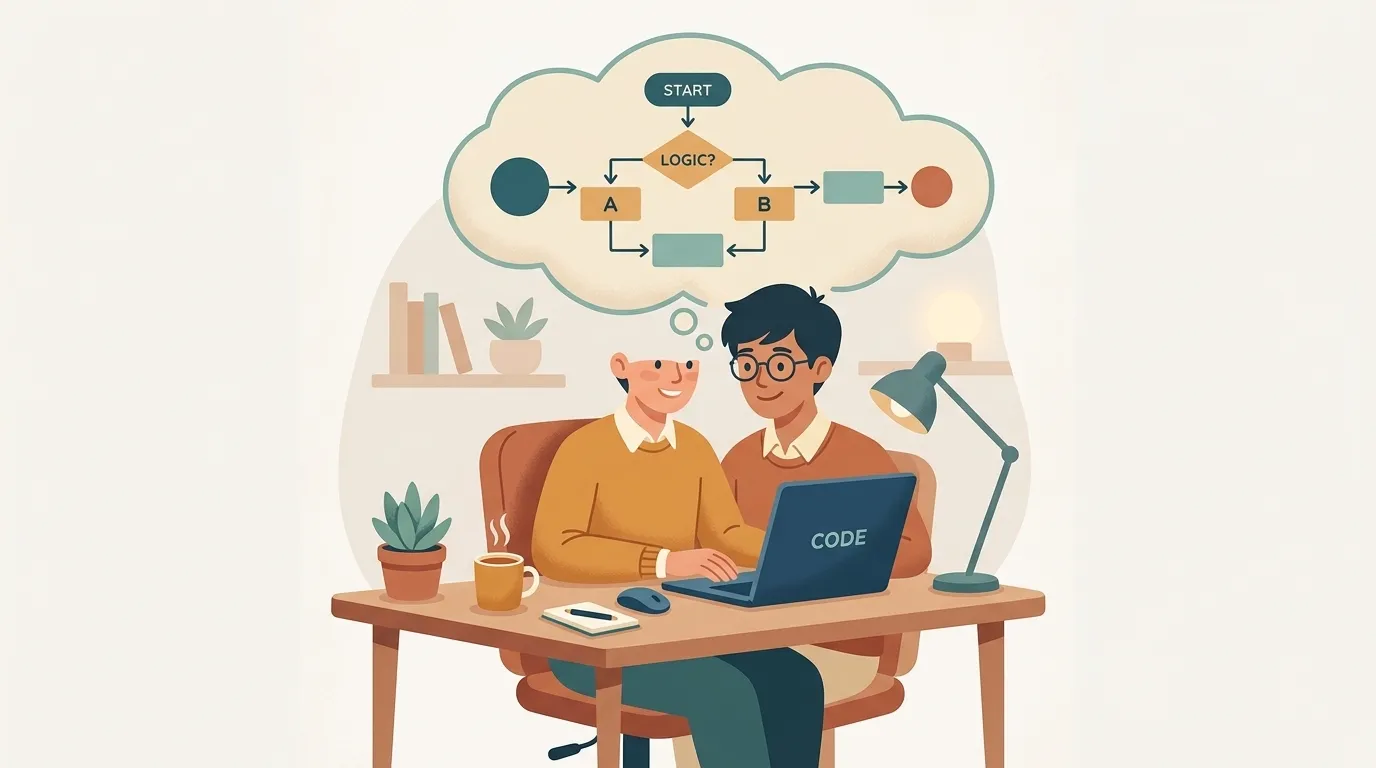
Before you start solving a thousand exercises, understand the game. A technical interview rarely wants to know whether you memorized the perfect solution. It wants to see how you think: whether you understand the problem before you start coding, spot edge cases, communicate your reasoning, and know how to say, "I don't know, but I would try this." A candidate who freezes in silence is more concerning than one who makes a mistake while explaining their thought process.
In other words, an interview is a technical conversation, not a multiple-choice test. That changes everything about how you prepare.
Before algorithms, get your fundamentals in order
There is a temptation to jump straight into difficult challenges. Resist it. First, make sure you know the basics of the language you will use: basic data structures (lists, maps, and sets), loops, functions, and how to manipulate strings and collections. Most junior-level interview problems can be solved with these skills and a bit of logic.
Then, understand—not memorize—the ideas that come up most often: arrays, hash maps, stacks, queues, and the notion that an operation can be "expensive" or "cheap" depending on the size of the input. You do not need to recite complexity theory; you need to be able to say, "This gets slow if the list grows too much because I go through everything for each item."
How to practice for real—not just watch videos
Watching someone solve a problem is comfortable and almost useless on its own. The practice that matters is the kind that feels a little uncomfortable: pick a problem, close the video, and try it yourself. Get stuck, research, solve it, and only then see how someone else approached it.
Two tips that are worth more than ten hours of tutorials:
- Solve problems out loud, as if someone were listening. This trains exactly what the interview evaluates.
- Review what you got wrong. A problem you got wrong but understood is worth more than five you solved by guessing.
Also practice in the real format: with limited time, writing actual code, and without magical autocomplete. Nervousness decreases when the setting already feels familiar.
During the interview: thinking out loud gets you halfway there
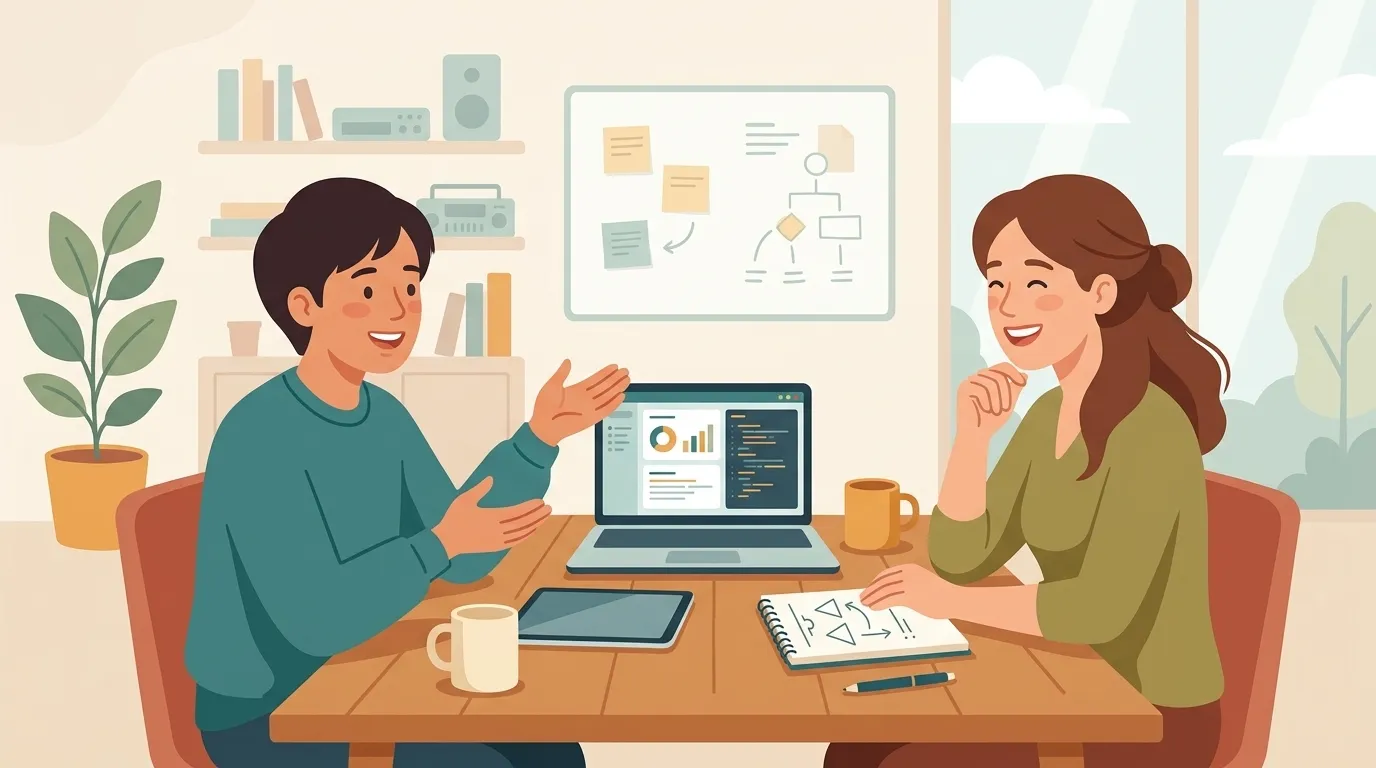
The time has come. Before writing a single line, repeat the problem in your own words and confirm the details: what goes in, what comes out, and what to do with unusual cases (an empty list? duplicate values? a huge input?). Asking questions is not a weakness; it is what a good professional does in real-world work.
Then describe your plan before coding. If it is a simple brute-force solution, it is fine to start there and improve it later—working and complete almost always beats perfect and imaginary. As you write, explain what you are doing. The interviewer cannot read your mind; they are hoping to understand your reasoning.
When you get stuck (because you will)
At some point, your mind will go blank. And that is okay—it is part of the process. What separates a good interview from a bad one is not never getting stuck; it is how you react. Say out loud where you got stuck, what you have already tried, and what you suspect. Often, the interviewer will give you a hint—and knowing how to use a hint is a valuable skill, not a failing.
If nothing comes of it, propose a path forward: "I would start by testing this hypothesis." Demonstrating a method under pressure can sometimes make a stronger impression than delivering the right answer in a panic.
After the interview
It is over? Take notes while everything is still fresh: which questions came up, where you got stuck, and what you would study differently. This notebook is your greatest shortcut—each interview becomes study material for the next one, and you quickly notice that the same topics come up again and again.
And remember: interviewing is a skill you can practice, not a talent you either have or do not have. The first few are intimidating; by the fourth or fifth, the butterflies turn into a mild chill—and by then, you are already playing the game instead of suffering through it.