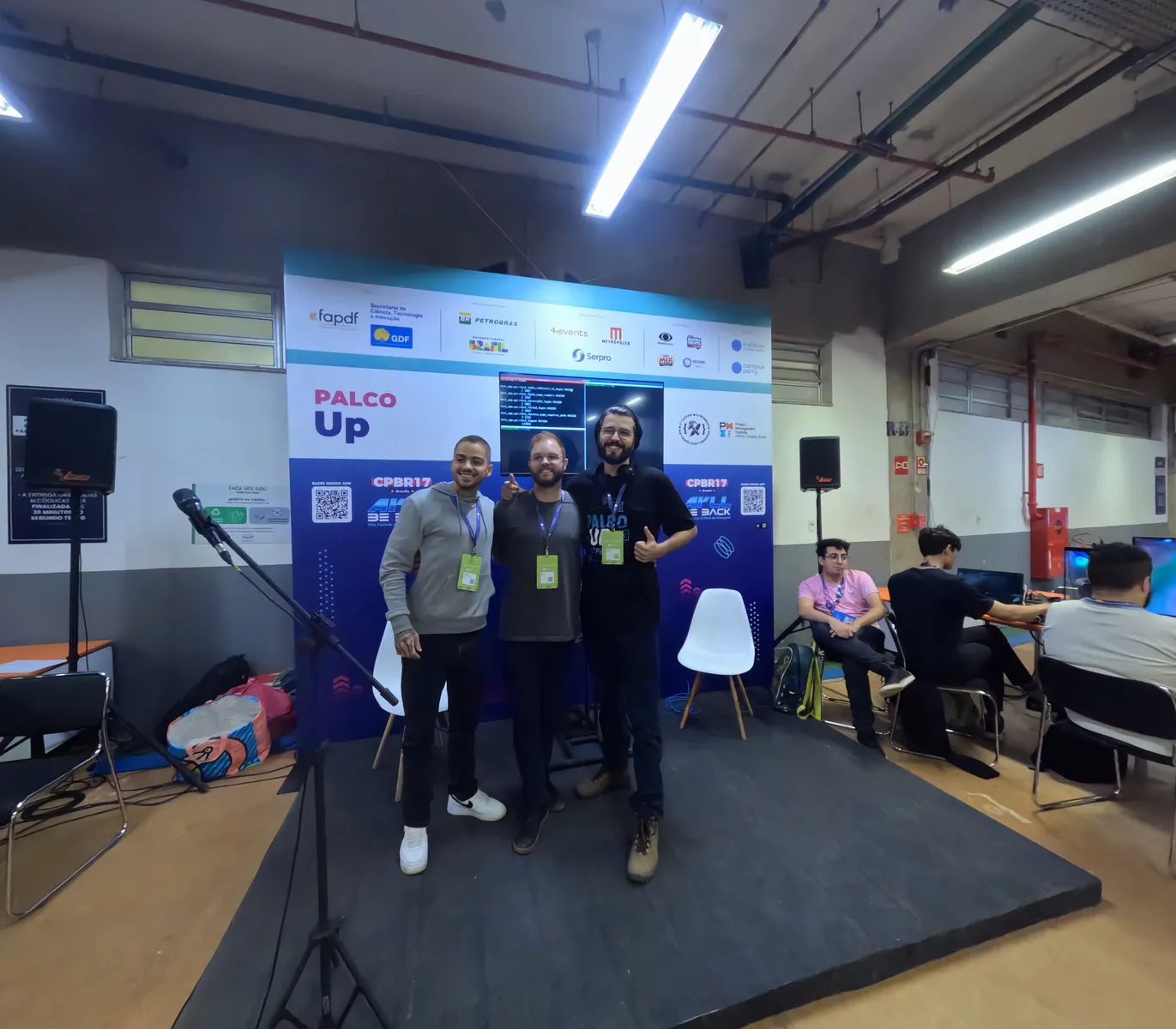
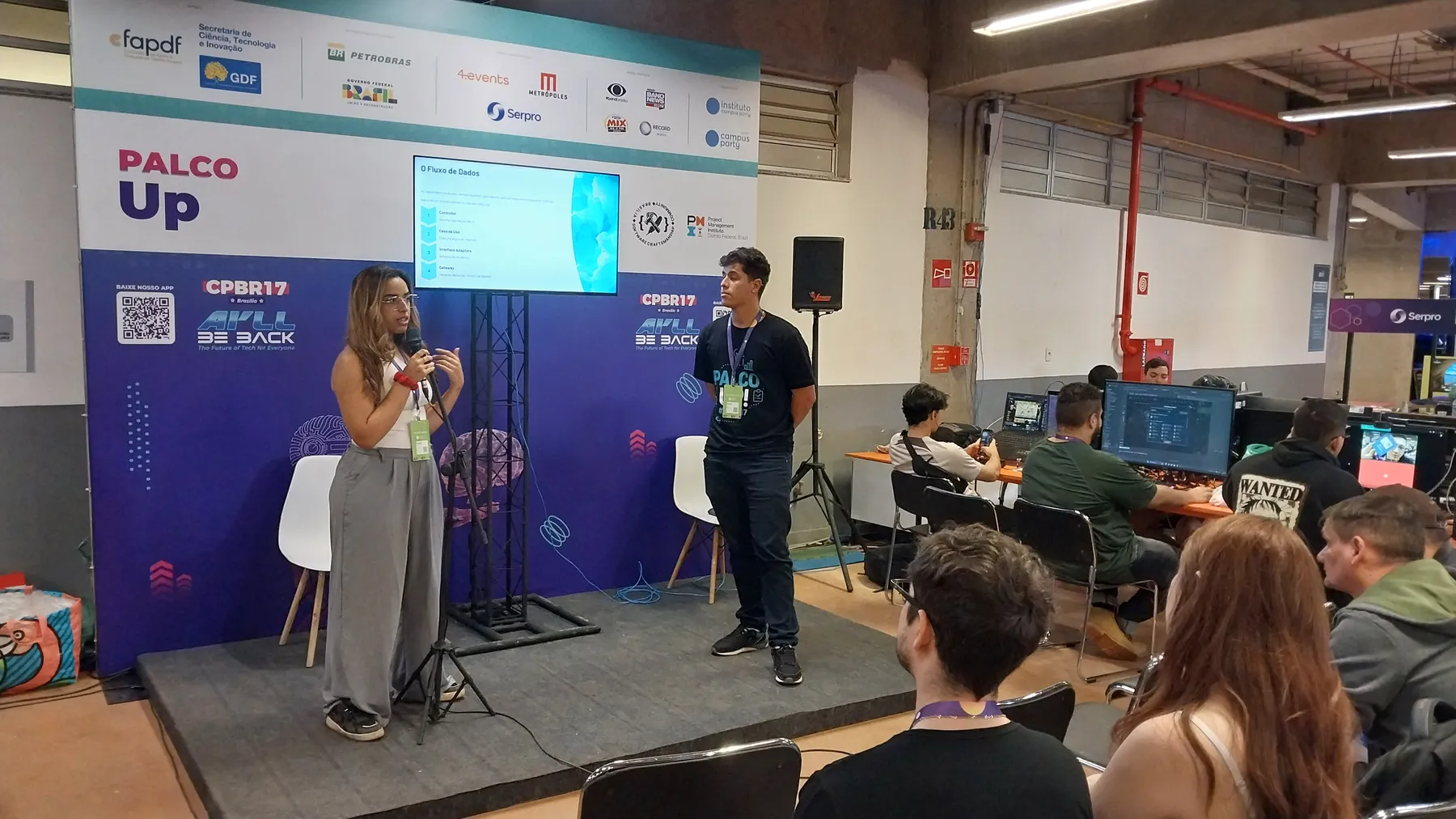
At Campus Party Brasil 2025 (CPBR17), held at Arena BRB Mané Garrincha in Brasília, DW Corp and Software Craftsmanship Community Brasília (SCCB) brought more than a series of standalone talks—they put together an entire track with a clear purpose: showing that a solid technical career is built in layers. From bare metal to bots, the three workshops in this track complemented one another in a compelling way. This article brings them together.
A purposeful technical track
Many people enter programming through the upper layers—frameworks, interfaces, and deploys—and never go down to the foundations. The track took the opposite approach: understanding how the machine works underneath (C), how to organize code so it lasts (Clean Architecture), and how to make sure it keeps working with the help of AI (QA). These are three different altitudes of the same craft.
Demystifying C: understanding the machine from the inside
The workshop “Demystifying C: Less Mystery, More Code,” led by Danrley Pereira, Gabriel Oliveira Faria, and Polyana Cunha, was a deep dive into the fundamentals. C is a language that does not hide the machine from you—and that is exactly where its educational value lies.
The highlight was manual memory management. In high-level languages, allocating and freeing memory happens behind the scenes; in C, it is your responsibility. Understanding allocation, pointers, and types is not academic nostalgia: it is what helps you understand why a program leaks memory, why one data structure is faster than another, or what really happens when you pass a value to a function. Anyone who understands C carries that intuition into every other language.
Demystifying Clean Architecture: organizing code to last
If C teaches what happens underneath, “Demystifying Clean Architecture,” with Gabriel Faria and Polyana Cunha, teaches how to organize what sits above it. The session dispelled the reputation for complexity surrounding the topic and went to the heart of the idea: separating responsibilities into layers and controlling the flow of dependencies.
The central rule is that dependencies point inward—the business rules at the heart of the system should not depend on details such as a database, framework, or user interface. The presenters compared approaches such as MVC, Hexagonal Architecture, and Clean Architecture, showing that they all pursue the same goal: modular, testable, and scalable code. The practical benefit is straightforward: when layers are properly separated, changing a database, testing a rule in isolation, or growing the system stops being a nightmare.
From Bugs to Bots: AI in the service of quality
The third pillar looked ahead. In “From Bugs to Bots: AI Revolutionizing Software Quality,” Aulus Diniz, Joseph Felipe, and Lucas Dórea showed how artificial intelligence is changing the daily work of QA.
The message was not that AI replaces quality professionals, but that it expands their reach: generating test scenarios, supporting failure analysis, accelerating coverage, and freeing the team to think about the genuinely difficult cases. Coming from people with a history in the quality assurance of critical systems, the tone was practical and grounded: AI is a powerful lever, but deciding what matters to test remains a human judgment.
The thread connecting all three
Taken together, the three workshops tell a single story. C provides the foundation—you understand the machine. Clean Architecture provides the structure—you organize growth. AI in QA provides the assurance—you keep everything working as the system evolves. A good engineer does not choose one of these layers; they move between them as the problem requires.
This is the philosophy DW Corp and SCCB brought to CPBR17, and it supports the community’s training and mentoring program: strong fundamentals, thoughtful architecture, and continuous quality. It is not about mastering the trend of the moment, but about building the foundation that makes it possible to keep up with whatever trend comes next. That foundation, layer by layer, was what the technical track aimed to deliver to everyone who visited the stage in Brasília.